
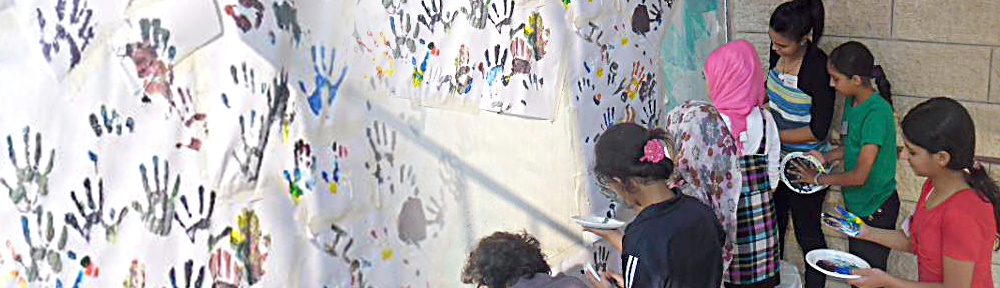
Partono i preparativi per il campo estivo!!
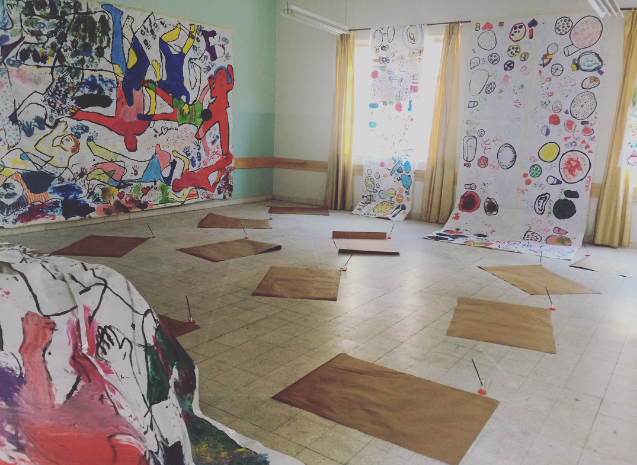
Continua a sostenere il nostro progetto, per portare tutti questi colori anche ad At’Twuani quest’anno!
Basta una piccola donazione, per un grande progetto!!
Forza: clicca su –> SUMMER CAMP AT’TWUANI 2017
E aiutaci a realizzare il progetto!!!
Tra i tanti sostenitori, qualcuno ha deciso di farci un splendido regalo!!
libri in valigia!!!
Ringraziamo di cuore IBBY ITALIA per aver contribuito al nostro progetto ” Summer camp 2017 ” con la donazione di 60 albi illustrati da donare ai bambini di At’Twuani e dei villaggi vicini.
In un contesto che lascia poco spazio al gioco, alla leggerezza e all’immaginazione, i libri possono divenire strumento per allenare questa immaginazione, una palestra per il pensiero!
Libri in valigia!
La valigia in questo caso ha un valore simbolico ma anche e sopratutto un valore pratico; la popolazione e quindi anche i bambini, si deve confrontare quotidianamente con le demolizioni delle case, con la distruzione, la costante precarietà delle loro esistenze; la valigia quindi come oggetto maneggevole che si può portare ovunque!
GRAZIE IBBY ITALIA!!!
——————————————————-
AIUTACI E SOSTIENI LA NOSTRA CAMPAGNA DI RACCOLTA FONDI!!
PER DAR VITA AL CAMPO ESTIVO ABBIAMO BISOGNO DEL TUO AIUTO!
Su www.ideaginger.it , progetto #JUMPintheC troverai tutte le informazioni su come aiutarci e sul nostro progetto!
Cosa aspetti??
Clicca su:
Il nostro progetto
GUARDA, DONA E CONDIVIDI!!!!
——————————————————————
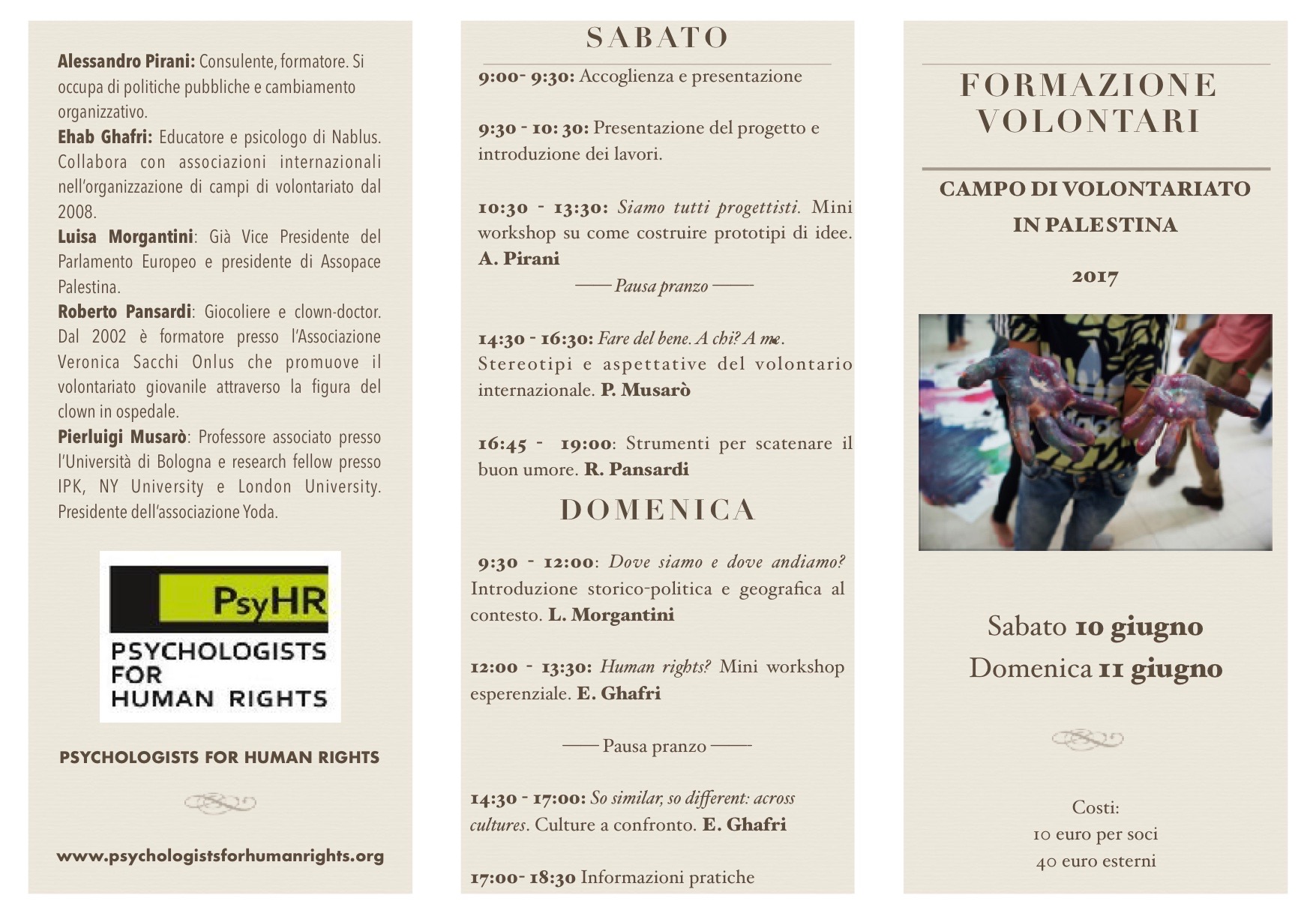
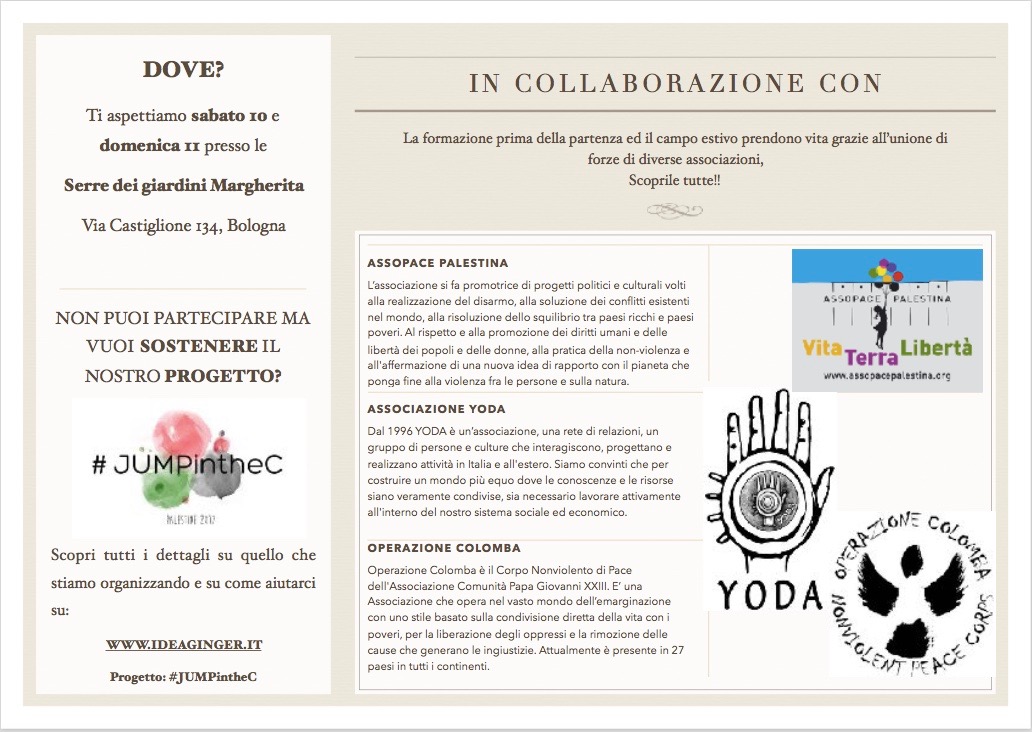
FORMAZIONE VOLONTARI 2017
Pronti per partire per At’Twuani???
Vi aspettiamo a Bologna, il 10 – 11 GIUGNO 2017
Clicca sull’immagine e leggi il programma!! La formazione è aperta anche agli interessati che non partiranno, magari per prepararsi alla prossima estate???
— — — — — — — — — — — — — — — —
SUMMER CAMP 2017
29 Luglio – 13 Agosto
CONOSCERE LA PALESTINA CON I BAMBINI DI AT-TWUANI
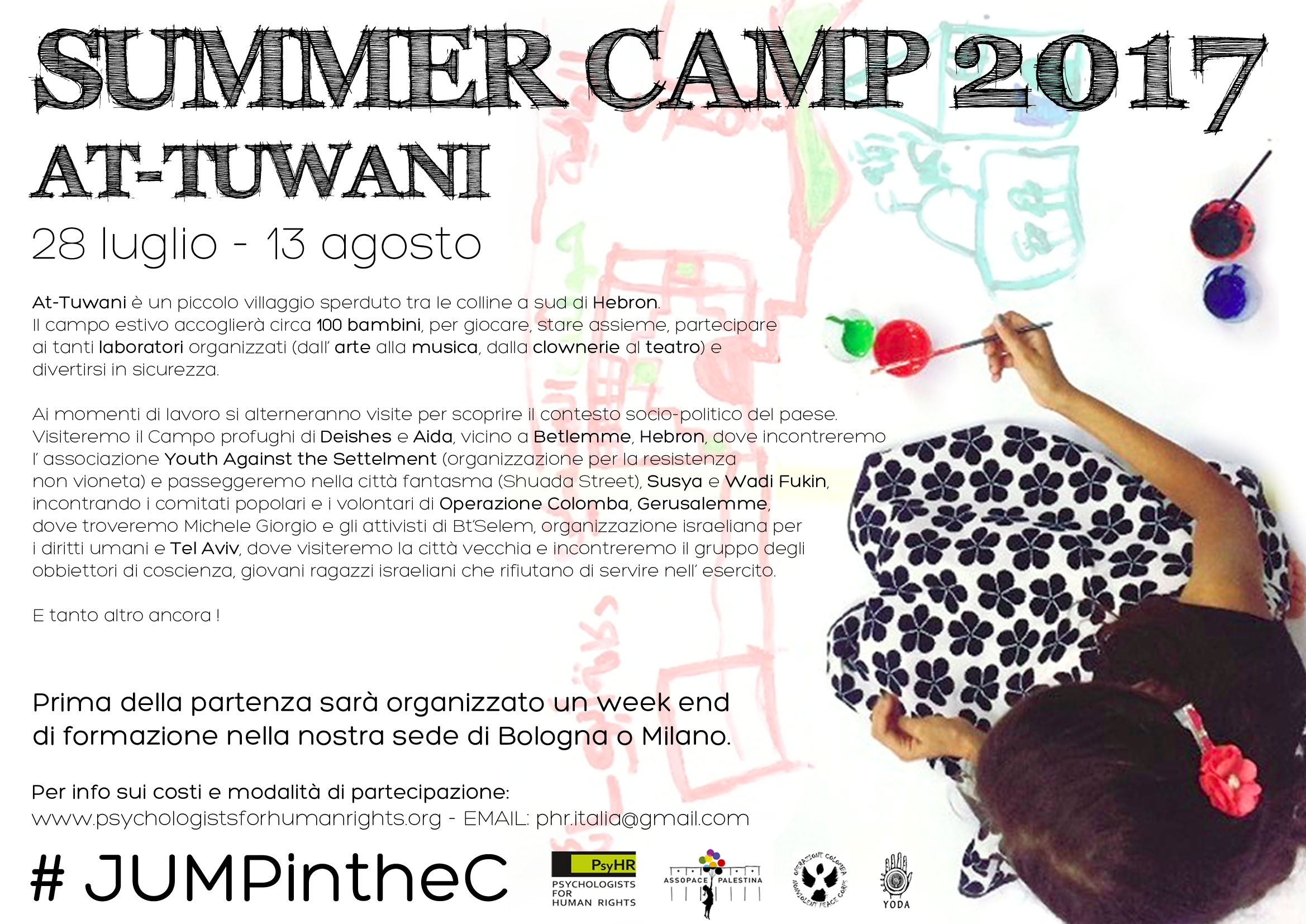
Psychologists for Human Rights, in collaborazione con Assopace Palestina, Operazione Colomba e il Comitato Popolare per la Resistenza Nonviolenta di At-Tuwani, da vita ad un nuovo campo estivo in Palestina!
At-Tuwani è un piccolo villaggio di circa 350 abitanti, sperduto tra le colline a sud di Hebron. Il campo estivo accoglierà circa 100 bambini, provenienti da At-Tuwani e dai villaggi vicini. I bimbi potranno giocare, stare assieme, partecipare ai tanti laboratori organizzati (che vanno dall’arte alla musica, dalla clownerie al teatro), potranno divertirsi in sicurezza.
Si alterneranno momenti di lavoro con i bambini a visite per scoprire il contesto socio-politico del paese.
Per il programma, informazioni e costi: SummerCamp 2017
————————————–
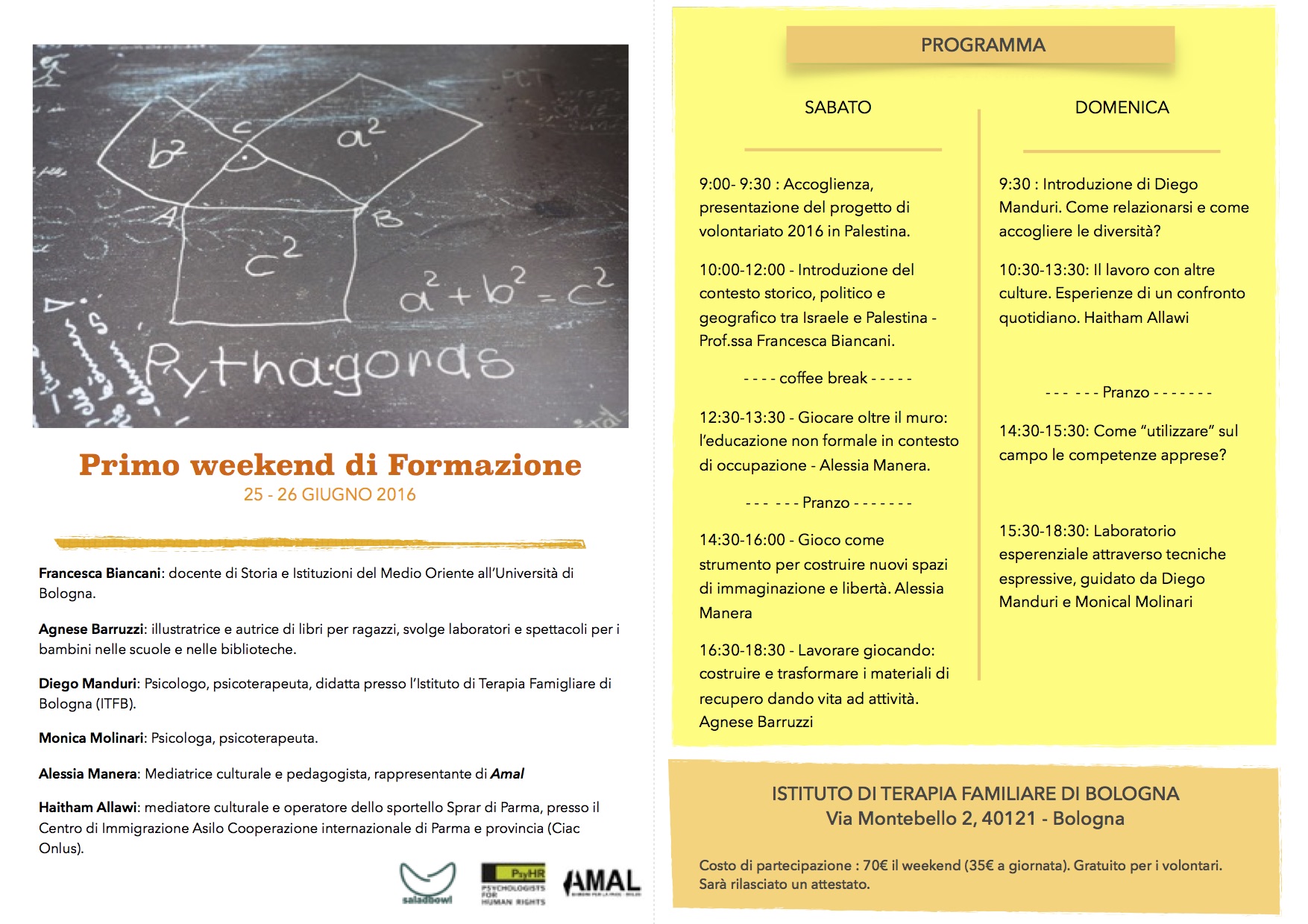
FORMAZIONE 2016
SABATO 25 E DOMENICA 26 GIUGNO – BOLOGNA
Sono aperte le iscrizione per le giornate di formazione di quest’anno! Si svolgerà in 2 week-end ( 25-26 giugno a Bologna, 9-10 luglio a Milano).
Ecco in anteprima il programma del primo weekend!
Vi aspettiamo!!!
Per informazioni scrivere a : phr.italia@gmail.com
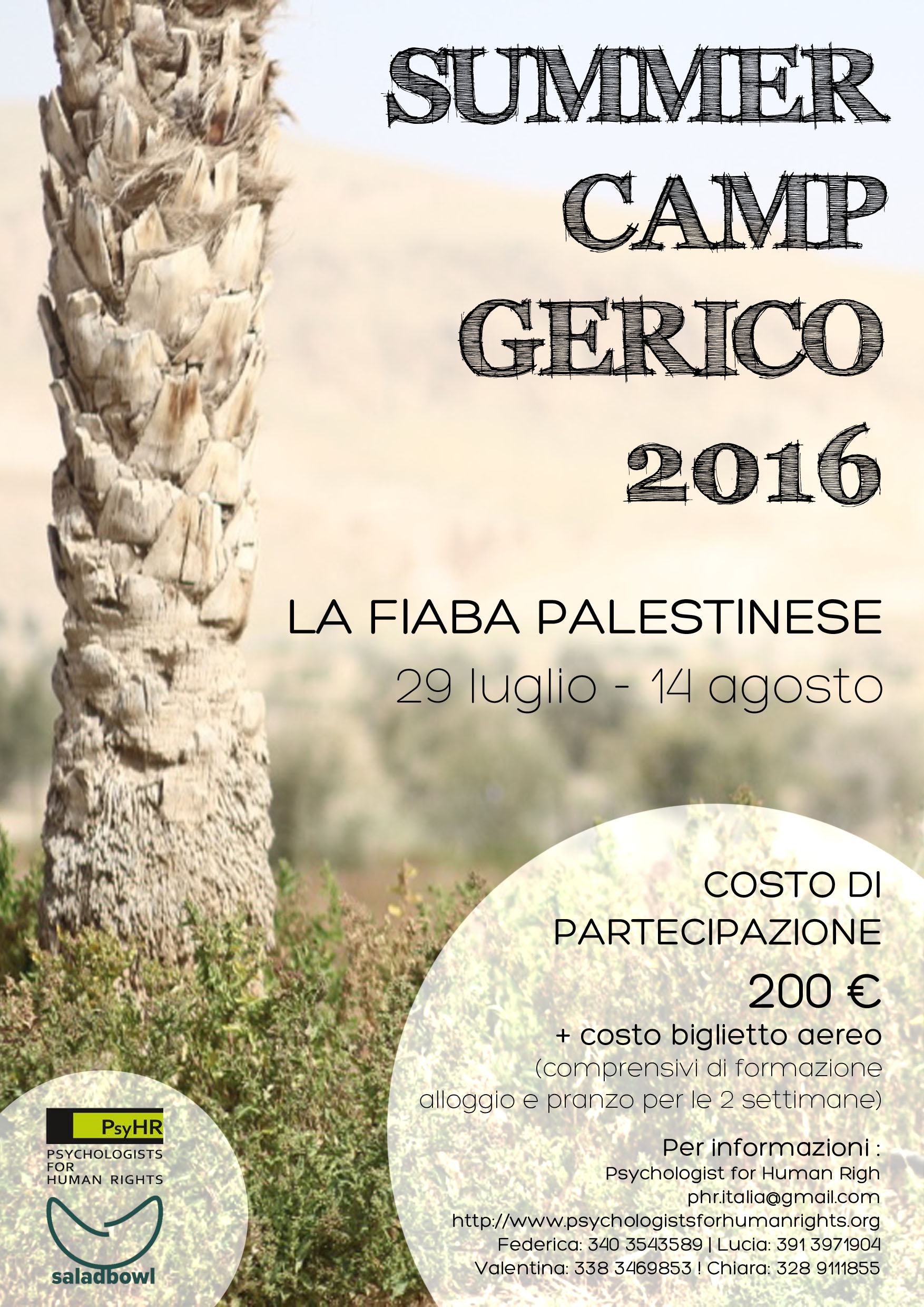
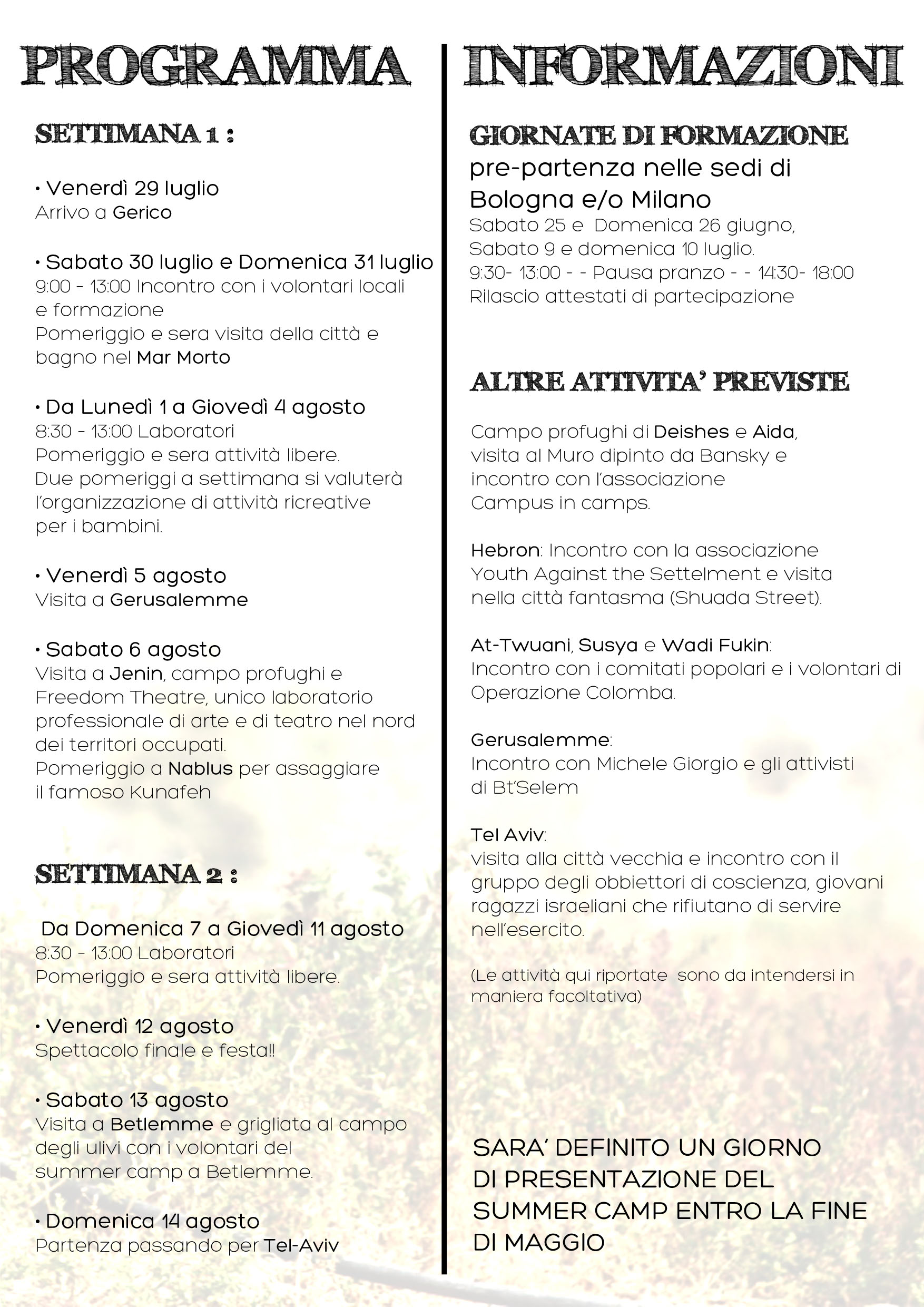
SUMMER CAMP 2016 – GERICO
CALL FOR VOLUNTEERS !!!!!
Da oggi sono ufficialmente aperte le adesioni per diventare un volontario al summer camp di quest’estate, che si terrà a Gerico!!
Contattataci per qualsiasi informazione!
Per stimolare la curiosità, un piccolo video sull’esperienza dell’anno scorso : Colors’ fighters in Deishes camp
—————————————
THEATRE OF RESISTANCE – TERZO MODULO
SONO ANCORA APERTE LE ISCRIZIONI PER LA SESSIONE DI LAVORO CON BEN RIVERS SUL PLAYBACK THEATRE
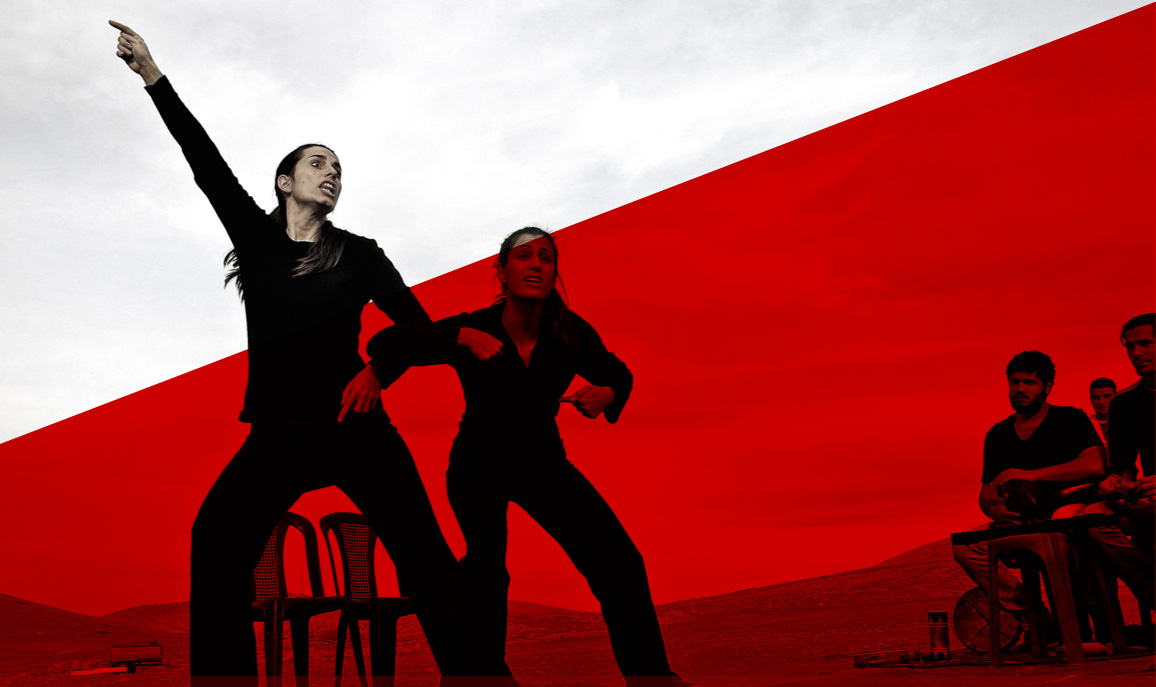
Condotto da BEN RIVERS
Dal 12 al 16 Maggio, ore 9:00 – 17:00
Casa della Carità, via Brambilla 8, Milano
BEN RIVERS è professionista specializzato nell’uso del teatro terapeutico e partecipato come strumento di mobilitazione per la comunità, attivismo culturale e reazione al trauma collettivo. Playback Theatre Trainer accreditato dal Centre for Playback Theatre di NewYork ha operato, e continua ad operare, in comunità colpite da oppressioni strutturali e violenze politiche. E’ membro fondatore dell’iniziativa FREEDOM BUS e co-fondatore della scuola araba del Playback Theatre di Beirut.
La pratica del PLAYBACK THEATRE, formulata per la prima volta negli anni settanta da Jhonatan Fox, oggi è usata in più di 60 paesi come strumento per promuovere la RICOSTRUZIONE DI COMUNITA’, il DIALOGO tra parti e la RISPOSTA A UN TRAUMA COLLETTIVO. La pratica di un profondo ascolto, la generazione di risposte solidali e creative, rendono il processo innescato dal Playback Theatre uno strumento prezioso nella stimolazione di resilienza.
Una COMUNITA’ si incontra in un luogo reso accogliente, strutturato secondo una disposizione rituale di oggetti e strumenti. Qualcuno inizia a raccontare una storia, o un momento della propria vita. Sceglie gli ATTORI per rappresentare i differenti ruoli, e poi guarda la sua storia immediatamente ricreata e offerta attraverso una coerente formalizzazione teatrale: una IMPROVVISAZIONE originale resa possibile da una speciale collaborazione tra i performer (attori musicista e conduttore) e il pubblico. LA REALTA’ CULTURALE ED EMOTIVA DI UNA COMUNITA’ PRENDE FORMA, ATTRAVERSO LE VICENDE DEI SUOI PORTAVOCE, i narratori disponibili a raccontare le proprie storie.
IL WORKSHOP intende:
- Offrire ai partecipanti STRUMENTI BASE del Playback Theatre subito utili alla PRATICA, stimolando e rafforzando le abilità necessarie a trasformare STORIE VERE in IMPROVVISAZIONI scenicamente ricche e metaforicamente pregnanti.
- Consentire ai partecipanti di DECLINARE tali strumenti nell’ambito di iniziative che promuovono una COSCIENZA CRITICA e un CAMBIAMENTO SOCIO-POLITICO.
- Esplorare i principi di un’azione teatrale che contiene TEMI come l’AVVERSITA’, il DISAGIO e il TRAUMA.
Le CANDIDATURE per partecipare al laboratorio sono aperte. Sono richieste competenze base in ambito teatrale o formazione accademica nell’ambito della mediazione culturale e l’intervento nelle zone di conflitto.
Il COSTO del modulo è di 350 euro. Sono previste agevolazioni per gli studenti universitari e per i team. Il ricavato finanzierà il prossimo Summer Camp promosso da Psychologists for Human Rights.
Per informazioni e iscrizioni
theatresistance@gmail.com
Chiara Zanetti 328 91111855
Azzurra Spirito 389 9939685
Per maggiori informazioni: Theatre of resistance